Anti-wrinkle injections use a prescription muscle-relaxing medicine to temporarily soften dynamic lines caused by facial expression.
The aim is a natural, movement-preserving softening, not a frozen look.
It is temporary, typically lasting a few months, and does not treat static lines or skin texture.
Who might consider it
The points below describe reasons people commonly explore this procedure. They are not eligibility criteria, only a qualified surgeon who has assessed you can advise whether it is appropriate for you.
People with expression lines (frown, forehead, crow’s feet) they would like softened.
People wanting a non-surgical, reversible-over-time option.
It is a prescription treatment; suitability is assessed by a qualified medical practitioner.
What happens during the procedure
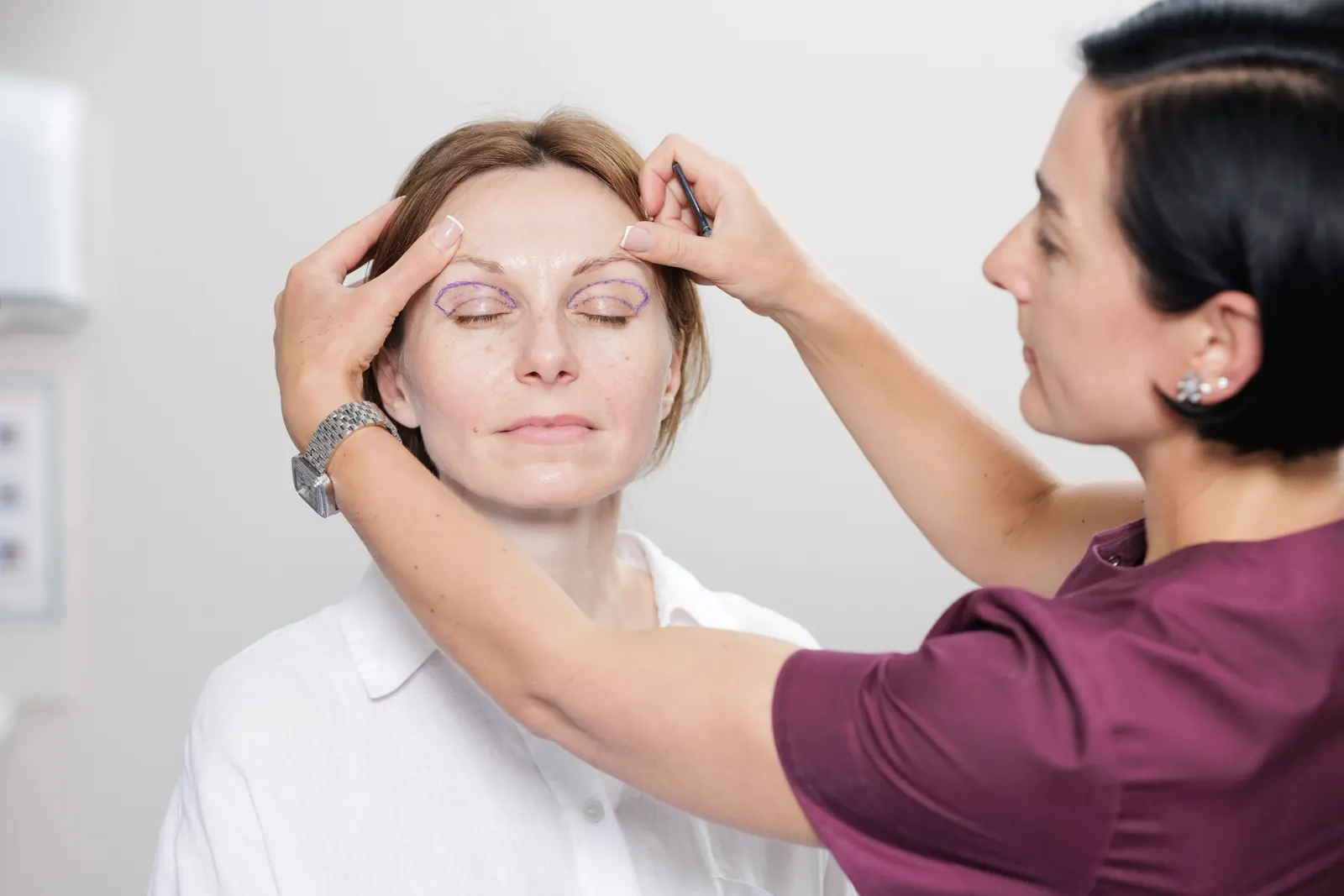
1After assessment, a series of small injections is placed into the targeted muscles.
2The appointment is quick and no anaesthetic is usually needed.
Recovery, stage by stage
First 24–48 hoursAvoid rubbing the area, lying flat immediately, and strenuous exercise for the rest of the day.
First weekThe effect gradually develops; small bruises can occur.
Weeks 2–4Full effect is usually seen by two weeks; a review or top-up may be offered.
Return to workImmediately, there is no downtime.
ExerciseAvoid strenuous exercise for the rest of the treatment day.
Longer termThe effect fades over roughly 3–4 months, after which repeat treatment is needed to maintain it.
Risks & considerations
Every procedure carries risks. The general points below are for information only and are not a complete list.
Bruising, swelling or tenderness at injection sites.
Temporary headache, or (uncommonly) a drooping brow or eyelid if the product spreads.
An uneven or over-treated result, which resolves as the effect wears off.
Only use a qualified medical practitioner who can manage complications. The risks that apply to you, and how likely they are, can only be assessed in person by a qualified, GMC-registered clinician who has assessed your health and goals. Nothing here is medical advice.
Cost
As a guide, this procedure typically costs in the region of £150 to £400Usually priced per area or per treatment; results are temporary. This is an indicative range to help you plan, not a quote. A surgeon will confirm your own cost only after assessing you.
What the price usually covers
Consultation
An assessment with a qualified practitioner before any treatment.
Practitioner’s fee
Reflects the practitioner’s medical qualification and experience.
Product / units
Usually priced per area, per syringe or per number of units used.
Review / top-up
Whether a follow-up review or top-up is included in the price.
Maintenance
Results are temporary, budget for repeat treatments to maintain them.
What affects the price
Number of areas treated.
The practitioner’s medical qualification and experience.
Whether a review/top-up is included.
Questions to ask your surgeon
A good consultation is a two-way conversation. Consider taking these questions with you.
What are your medical qualifications, and are you insured for this treatment?
What product are you using, and how long does it typically last?
What result is realistic, and how will you keep it looking natural?
What are the possible side effects, and how would you manage a complication?
Is a review or top-up included, and what does maintenance cost over a year?