Breast · Breasts

Breast Augmentation

Surgery to increase breast size or improve shape and symmetry, usually with implants.

  • £5,500–£8,500Indicative range
  • 2–6 weeksTypical recovery
  • 1–2 hoursTime in theatre

Prices are indicative UK ranges for research only, never a quote. Your surgeon will confirm costs after assessing you.

Find a surgeonTake the assessment
Breast Augmentation

Overview

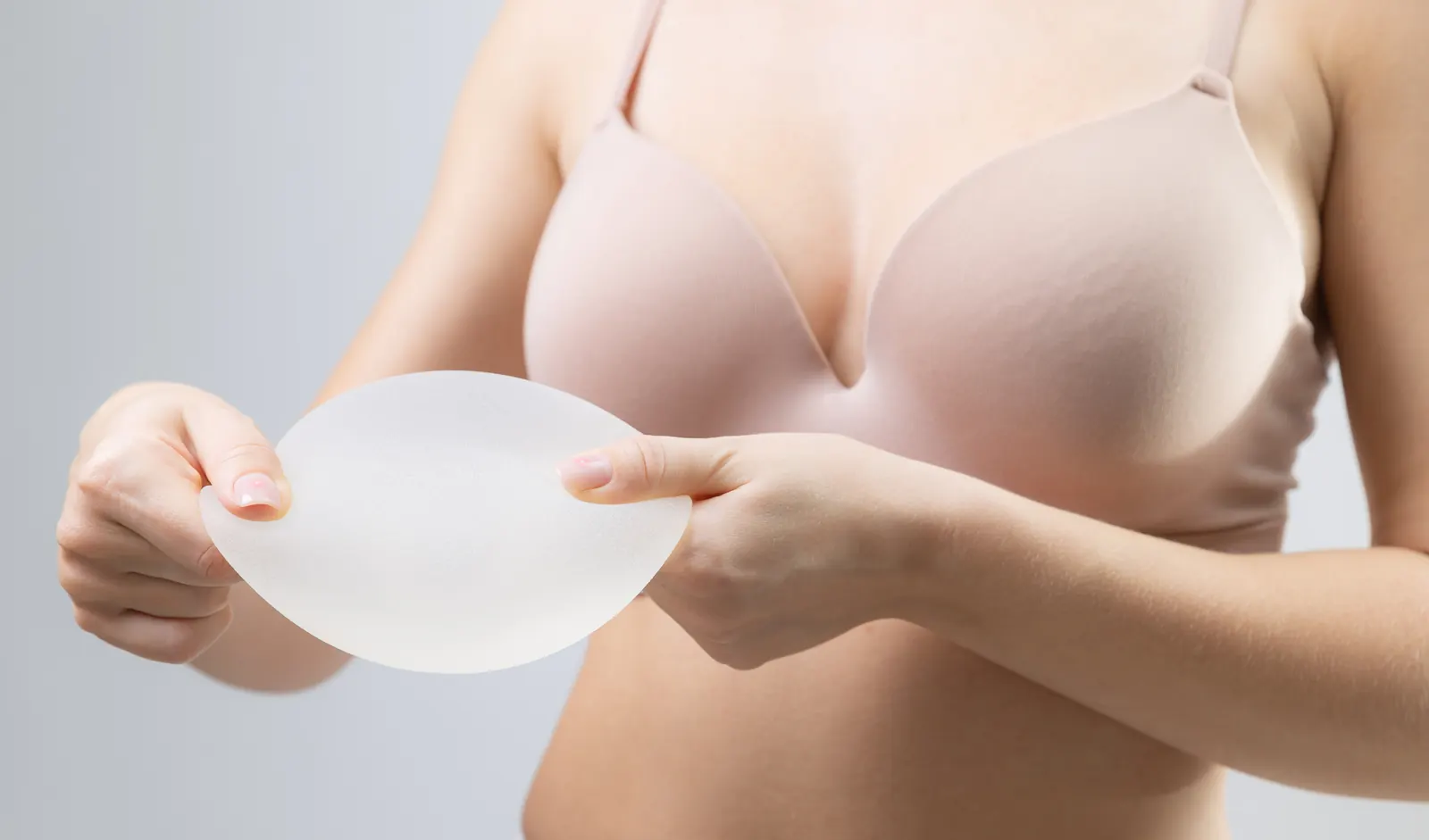
Breast augmentation increases size, or improves shape, fullness and symmetry, most often using implants and, less commonly, your own fat (fat transfer). An implant is placed either behind the breast tissue or partly under the chest muscle.

Goals vary widely and there is no single “correct” proportion. Some people want a subtle, natural change; others choose a fuller or more obvious result. Both are valid choices. The outcome is a personal decision you agree with your surgeon after discussing your frame, your existing breast tissue and what you want to achieve, rather than a fixed idea of what is proportionate.

It does not lift significantly sagging breasts. That usually needs a separate uplift, sometimes combined with augmentation. Implants are also not lifelong, and most people will need a replacement or removal at some point in their life.

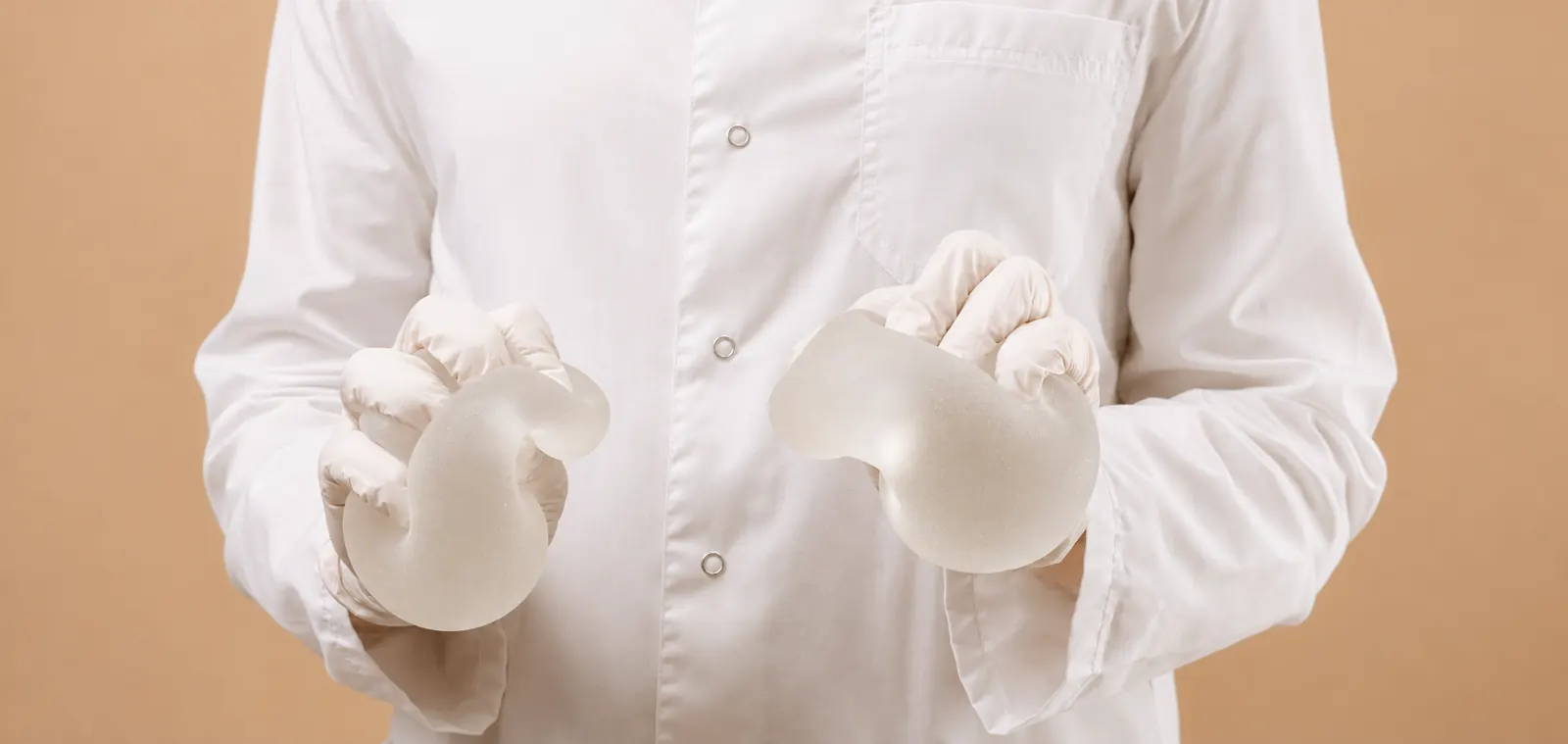
Much of the decision is about the implant itself and where it is placed. Small differences in fill, shape, profile, surface, gel cohesivity, placement and size all change how the result looks and feels, so it is worth understanding the main choices before your consultation. The sections below explain them in plain English.

Choosing an implant

The choices below are described so you can follow a conversation with your surgeon. None is universally best, the right combination depends on your body, your goals and your surgeon’s recommendation.

Implant fill and material

Silicone gel implants
Filled with a soft silicone gel. The most common choice in the UK, generally considered to feel closer to natural breast tissue than saline.
Highly cohesive silicone (“gummy bear”) implants
A firmer, more stable gel that holds its shape and largely keeps its form even if the shell is damaged. Firmer to the touch than softer gels.
Saline implants
A silicone shell filled with sterile salt water, sometimes after it is positioned, which can allow a smaller incision. Less commonly used in the UK; they can feel firmer and are more prone to visible rippling.
B-Lite lightweight silicone implants
Designed to weigh less than a conventional silicone implant of an equivalent volume, by including tiny hollow microspheres in the gel. Sometimes considered where implant weight is a concern.

Implant shape

Round
Symmetrical top to bottom, adding fullness across the whole breast including the upper part. The most widely used shape.
Anatomical / teardrop
Fuller at the bottom than the top, intended to echo a natural breast slope. Because the shape is directional, rotation within the pocket can affect appearance.
Ergonomic / dynamic-shape implants
Designed to behave more naturally with changes in body position, sitting rounder when lying down and more teardrop when upright, rather than holding one fixed shape.

Profile and projection

Profile describes how far an implant projects forward from the chest for a given base width. For the same volume, a higher profile is narrower and projects more, while a lower profile is wider and projects less. Manufacturer terminology varies, so the same label can mean slightly different things between brands.

Low profile
Less forward projection on a wider base.
Moderate profile
A middle-ground amount of projection.
Moderate-plus profile
Slightly more projection than moderate.
High profile
More forward projection on a narrower base.
Extra-high / ultra-high profile
The most projection for a given base width.

Implant surface

The outer shell can be finished in different ways, which affects how the body forms scar tissue around it. This is also where a rare condition called BIA-ALCL (breast implant-associated anaplastic large cell lymphoma) is relevant: current evidence links it mainly to certain textured surfaces rather than smooth ones. It is rare and is usually treatable when found early. Your surgeon can explain the current evidence and which implants they use.

Smooth
A smooth shell that moves freely within the pocket created for it.
Micro / nanotextured (minimally textured)
A very fine surface texture.
Textured
A rougher surface intended to help the implant stay in position and, historically, to reduce firm scar tissue forming around it.
Polyurethane-coated
A foam-like coating that surrounding tissue grows into, helping to anchor the implant in place.

Gel cohesivity

Cohesivity describes how tightly the silicone gel holds together. It affects how the implant feels, how much it moves, how likely it is to ripple, and how well it keeps its shape over time.

Softer / more responsive gels
Move and feel more like natural tissue, but can be more prone to rippling.
Medium cohesivity
A balance between a natural feel and shape retention.
Highly cohesive / form-stable gels
Hold their shape most firmly (the “gummy bear” end of the range), with less rippling but a firmer feel.

Placement (where the implant sits)

Subglandular / over the muscle
Behind the breast tissue but in front of the chest muscle.
Subfascial
Behind the thin layer of tissue (fascia) covering the muscle, but still in front of the muscle itself.
Submuscular / under the muscle
Partly or fully beneath the chest muscle, which can give more soft-tissue cover over the top of the implant.
Dual plane
A common approach that sits the implant partly under the muscle and partly under the breast tissue.
Dual Plane I, II and III
Variations of the dual-plane technique that adjust how much of the muscle is released, chosen to suit the breast tissue and the degree of droop.

Size and dimensions

Implants are measured by more than a single number. Volume (in CC) is only one part of the picture; base width, height and projection all shape the result, and the same volume can look very different on different frames. For this reason CC alone does not determine your final breast size or appearance.

Volume (CC)
The amount the implant holds. One factor among several, not a dress-size equivalent.
Base width
How wide the implant is across the chest, matched to your own chest and breast width.
Implant height
How tall the implant is, most relevant for shaped implants.
Projection
How far the implant stands forward, linked to its profile.

Specialist and newer options

Some implants combine the features above in particular ways, or use newer technologies. These are options to discuss with your surgeon, not recommendations.

B-Lite lightweight implants
Reduced-weight silicone implants, as described under fill and material.
Ergonomic implants
Designed to change shape with body position.
Motiva-type technologies
Smooth or minimally textured implant ranges marketed for their surface and shell design.
Polyurethane-coated implants
Foam-coated implants intended to anchor in position.
Anatomical / form-stable implants
Shaped, highly cohesive implants that hold a teardrop form.

Who might consider it

The points below describe reasons people commonly explore this procedure. They are not eligibility criteria, only a qualified surgeon who has assessed you can advise whether it is appropriate for you.

  • People who feel their breasts are smaller than they would like, or who want to improve asymmetry.
  • People restoring volume after pregnancy or weight change.
  • Suitability, implant type and placement are decided with a qualified surgeon after examination.

What happens during the procedure

  • 1Under general anaesthetic, an incision is made (commonly in the breast crease) and an implant placed either behind the breast tissue or partly under the chest muscle.
  • 2Implant type, size, shape and placement are chosen to suit your body and goals.
  • 3Most people go home the same day or after one night.

Recovery, stage by stage

  1. First 24–48 hoursTightness, soreness and swelling; a support bra is worn. Rest and avoid lifting.
  2. First weekDiscomfort eases; many switch to lighter pain relief.
  3. Weeks 2–4Swelling reduces and implants begin to settle into a more natural position.
  4. Return to workDesk-based work often after 1–2 weeks; avoid strenuous tasks.
  5. ExerciseLower-body activity earlier; chest and upper-body exercise usually avoided for 4–6 weeks.
  6. Longer termImplants settle over 3–6 months. Regular self-checks and reviews are recommended for the life of the implants.

Risks & considerations

Every procedure carries risks. The general points below are for information only and are not a complete list.

  • Bleeding, infection and anaesthetic risks.
  • Capsular contracture (firm scar tissue around the implant), implant rupture or rippling.
  • Changes in nipple or breast sensation.
  • The likelihood of further surgery over your lifetime, as implants are not permanent.
  • A rare association between certain implants and specific conditions, ask your surgeon to explain the current evidence.
  • The risks that apply to you, and how likely they are, can only be assessed in person by a qualified, GMC-registered clinician who has assessed your health and goals. Nothing here is medical advice.

Cost

As a guide, this procedure typically costs in the region of £5,500 to £8,500Implants are not lifelong, factor in the possibility of future replacement. This is an indicative range to help you plan, not a quote. A surgeon will confirm your own cost only after assessing you.

What the price usually covers

Consultation
Sometimes redeemable against the procedure if you decide to go ahead.
Surgeon’s fee
Reflects the surgeon’s training, experience and time in theatre.
Hospital / theatre
Facility, nursing and any overnight stay.
Anaesthesia
The anaesthetist’s fee, where a general anaesthetic is used.
Aftercare & follow-ups
Dressings, support garments and review appointments, check what is included.
Revision policy
What a further procedure would cost if one were ever needed.

What affects the price

  • Implant type and brand.
  • Whether combined with an uplift.
  • Surgeon experience and hospital setting.
  • Long-term costs of monitoring and possible future replacement.

Questions to ask your surgeon

A good consultation is a two-way conversation. Consider taking these questions with you.

  • What implant type, size and placement do you recommend for my frame, and why?
  • What is the expected lifespan of these implants, and what does replacement cost?
  • How do you monitor implants over time, and what follow-up is included?
  • What are the signs of a complication I should watch for?
  • How many of these do you carry out each year, and what are your own complication rates?
  • What result is realistic for me specifically, and what are the limitations?
  • What are the main risks in my case, and how would any complications be handled?

Surgeons offering Breast Augmentation

View all surgeons
Portrait of Dr Liz Purcell, Consultant Plastic Surgeon

Dr Liz Purcell

Consultant Plastic Surgeon

MB BA BCh MMedSci MRCSI FRCSI(Plast) EBOPRAS FESSH

  • Ireland

Specialities

Plastic and reconstructive surgery, Aesthetic surgery, Hand surgery, Breast surgery, Breast reconstruction, Microsurgery, Breast reduction

Clinic

Tara Clinic

Tara Court, Dublin Road, Naas, Co. Kildare, Ireland
Portrait of Miss Anne Dancey, Consultant Plastic Surgeon

Miss Anne Dancey

Consultant Plastic Surgeon

FRCS(Plast), MBChB(Hons), MMedSci(Hons), MCh(PASP)

  • GMC 4615482
  • International

Specialities

Breast augmentation, Breast reduction, Breast uplift, Breast reconstruction, DIEP flap breast reconstruction, Abdominoplasty, Liposuction, Arm lift, Thigh lift, Body lift, Blepharoplasty, Facelift, Neck lift, Labiaplasty, Lymphoedema surgery, Lipoedema surgery, Skin lesion surgery, Non-surgical aesthetics

Clinic

Cayman Surgery

Governors Square, Unit 4-113, 23 Lime Tree Bay Avenue, Grand Cayman, KY1-1208, Cayman Islands

Portrait of Miss Sameena Hassan, Consultant Plastic Surgeon

Miss Sameena Hassan

Consultant Plastic Surgeon

BSc (Hons) MBChB MRCS PGCertMedEd FRCS(Plast)

  • 15+ Years experience
  • GMC 6157000
  • West Midlands

Specialities

Body surgery, Eyelid Surgery, Gynecomastia (male breast reduction), Liposuction, Mole Removal, Scars, Setting back prominent ears

Clinic

Birmingham Children's Hospital

Department of Plastic Surgery, Steelhouse Lane, Birmingham, B4 6NH

Portrait of Miss Serena Martin, Consultant Plastic Surgeon

Miss Serena Martin

Consultant Plastic Surgeon

MB BCh BAO(Hons) BSc(Hons) FRCS(Plast)

  • Northern Ireland

Specialities

Aesthetic Genital Surgery, Body surgery, Botulinum toxin injections (Botox), Breast surgery, Eyelid Surgery, Facelifts, Facial Surgery, Lip enhancement, Mole Removal, Rhinoplasty, Setting back prominent ears

Clinic

Kingsbridge Private Hospital North West

Church Hill House, Main Street, Ballykelly, Londonderry, BT49 9HS

Portrait of Miss Shan Shan Jing, Consultant Plastic Surgeon

Miss Shan Shan Jing

Consultant Plastic Surgeon

MBBS, BSc (Hons), FRCS (Plast), Hand Dip (Br), EBHS

  • 18+ Years experience
  • GMC 7021343
  • London

Specialities

Breast augmentation, Breast uplift (mastopexy), Breast uplift with implants, Breast reduction, Breast auto-augmentation (own tissue), Breast revision surgery, Tummy tuck (abdominoplasty), Mummy makeover, Liposuction, Body contouring after weight loss, Arm lift, Thigh lift, Labiaplasty, Eyelid surgery (blepharoplasty), Ear pinning (pinnaplasty)

Clinic

Harley Health Village

64 Harley Street, London, W1G 7HB

Related procedures

Frequently asked questions

How long do breast implants last?

Implants are not designed to last a lifetime. Many people will need a replacement or removal at some stage. Your surgeon can discuss typical timescales.

Will augmentation lift sagging breasts?

Not on its own. Significant sagging is usually addressed with a breast lift, sometimes combined with augmentation.

Can I breastfeed after augmentation?

Many people can, but it is not guaranteed. Raise this at your consultation so the technique can take it into account.

How do I choose a size?

A good surgeon will focus on what suits your frame and goals rather than a single number, and will let you try sizers.

We use cookies to improve your browsing experience

For more information please refer to our Privacy Policy.